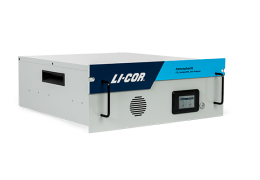
Follow these guidelines when shipping or storing the instrument.
Storing the instrument
The instrument can be placed in short-term storage (for several weeks) without any special preparations. For longer-term storage (longer than a month), we recommend that you remove the batteries from the analyzer and maintain their charge periodically. The instrument storage temperature is -45 to 50 °C, <85% relative humidity.
Storing lithium-ion batteries
Batteries are manufactured by Inspired Energy®. Comprehensive storage and shipping information is available at www.inspired-energy.com/shipping.
Store the batteries with a 30 to 50% charge. Replenish the charge every 6 months of storage to avoid excessive discharge.
The battery storage conditions should be -20 to 60 °C, <80% relative humidity. However, it is best to store them below 21 °C in a cool, dry, well-ventilated facility free from corrosive gas or vapor. Storage at elevated temperatures (>45 °C) will degrade battery performance and reduce battery life. Storage at low temperatures may affect initial battery performance. Extended storage may require a calibration cycle or a few regular operating cycles to restore full accuracy to the fuel gauge.
If a battery exceeds a temperature or load threshold, a non-resettable fuse will open, rendering the battery non-functional.
If a battery become excessively discharged in storage, you can attempt to restore it by charging. The charger will supply a 3-minute wake-up charge in an attempt to activate the electronics. If this does not work, the battery should be replaced.
Shipping the instrument
Caution: Protect the analyzer from mechanical impacts. Use the box and foam to protect the instrument when shipping the analyzer.
The instrument is delivered in a double-wall cardboard box with foam blocks. Keep the box and foam so you can use them to ship the instrument, should the need arise. Cover the air inlet and outlet with the blue caps (part number 620-17951) provided with the instrument or scotch tape to keep dust from entering the connectors before packing the analyzer. Place the instrument in the box with foam blocks.
Shipping lithium-ion batteries
Many new LI-COR instruments include removable lithium-ion batteries. We recommend that you do not ship these batteries when shipping your instrument to the factory.
Effective April 1, 2016, new shipping requirements were issued regarding the shipment of lithium-ion batteries. There are three separate shipping scenarios described below: 1) Batteries are packaged with the original equipment, 2) Additional batteries (quantity of two or fewer) are packaged without the original equipment, and 3) Additional batteries(quantity of three to ten) are packaged without the original equipment.
Shipping batteries with equipment
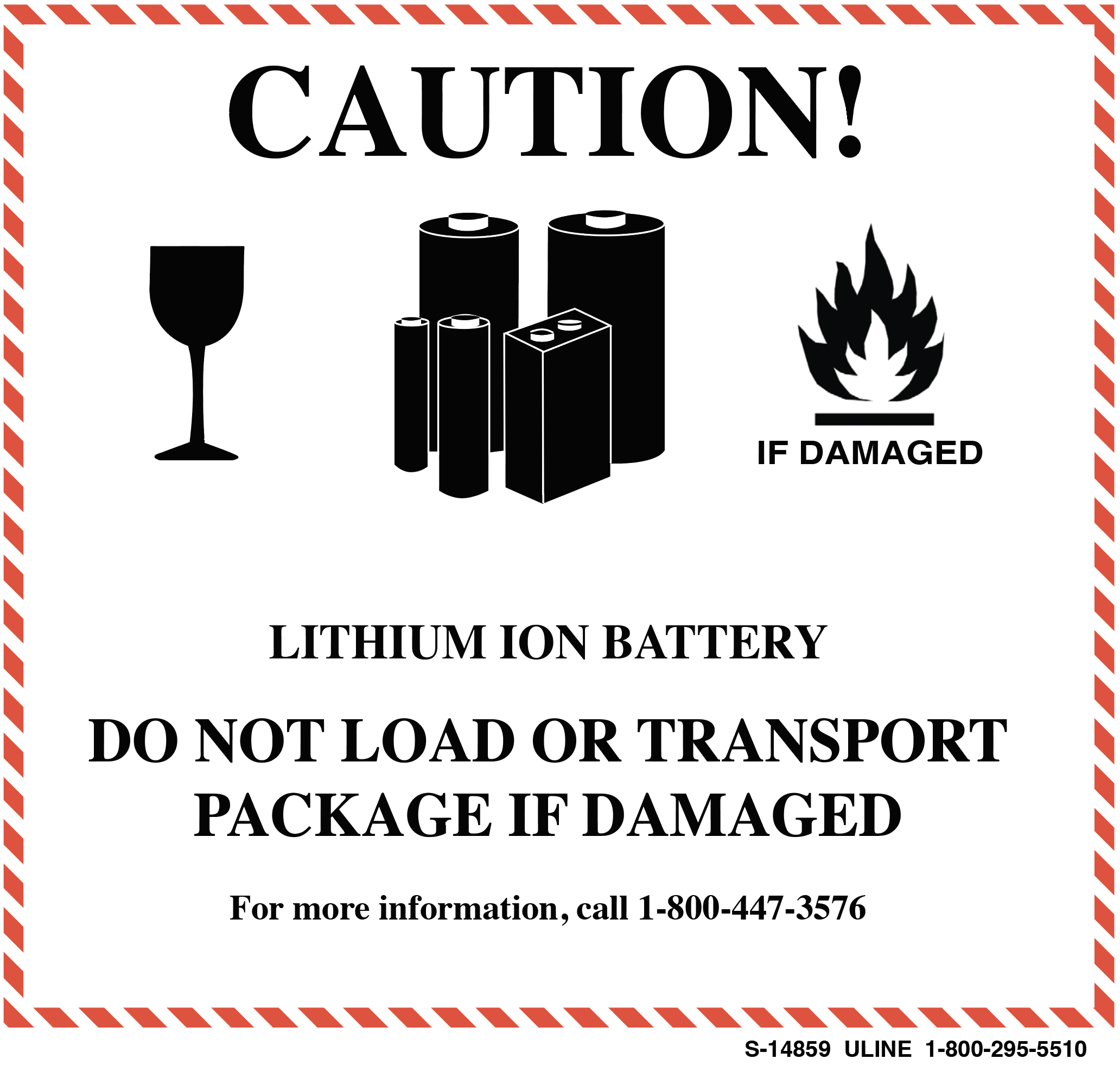
When packed with equipment, lithium-ion batteries (quantity 1-3) are classified as UN3481, packing instruction 966, section II, and require that the package be labeled with the lithium-ion battery handling label (see Figure 8‑1). A full-size copy of this label that can be printed and affixed to the package is available from licor.app.boxenterprise.net/v/Li-Ion-Shipping-Label.
Shipping batteries without equipment (2 or less)
When packed without equipment, lithium-ion batteries (quantity 1-2) are classified as UN3480, packing instruction 965, section II, and require:
- Not declared as Dangerous Goods.
- One or two batteries.
- Shipper’s Declaration: Quantity and type of packing - Packing: 1 Fiberboard Box, Quantity: 0.46 kg weight per battery.
- Label package with lithium-ion battery handling label; a copy is available from licor.app.boxenterprise.net/v/Li-Ion-Shipping-Label.
- Label package as Cargo Aircraft only.
- Airway bill states “Lithium-ion batteries in compliance with Section II of PI 965”.
- Only one package per consignment.
Shipping batteries without equipment (3 to 10)
When packed without equipment, lithium-ion batteries (quantity 3-10) are classified as UN3480, packing instruction 965, section IB, and require:
- Is declared as Dangerous Goods (Proper shipping name: UN3480 Lithium Ion Batteries, Class 9)
- Three to ten batteries
- Shipper’s Declaration: Quantity and type of packing - Packing: 1 Fiberboard Box, Quantity: 0.46 kg weight per battery
- Label package with lithium-ion battery handling label; a copy is available from licor.app.boxenterprise.net/v/Li-Ion-Shipping-Label.
- Label package as Cargo Aircraft only
- Label package with Class 9 hazard label
- Airway bill states “Lithium-ion batteries in compliance with Section IB of PI 965”
Notes
- These packages must be handled with care. A flammability hazard exists if the package(s) is damaged.
- If package is damaged in transport, it must not be loaded until the condition of the contents can be verified. The batteries contained in the package must be inspected for damage and may only be repacked if they are intact and protected against short circuits.